






Intro
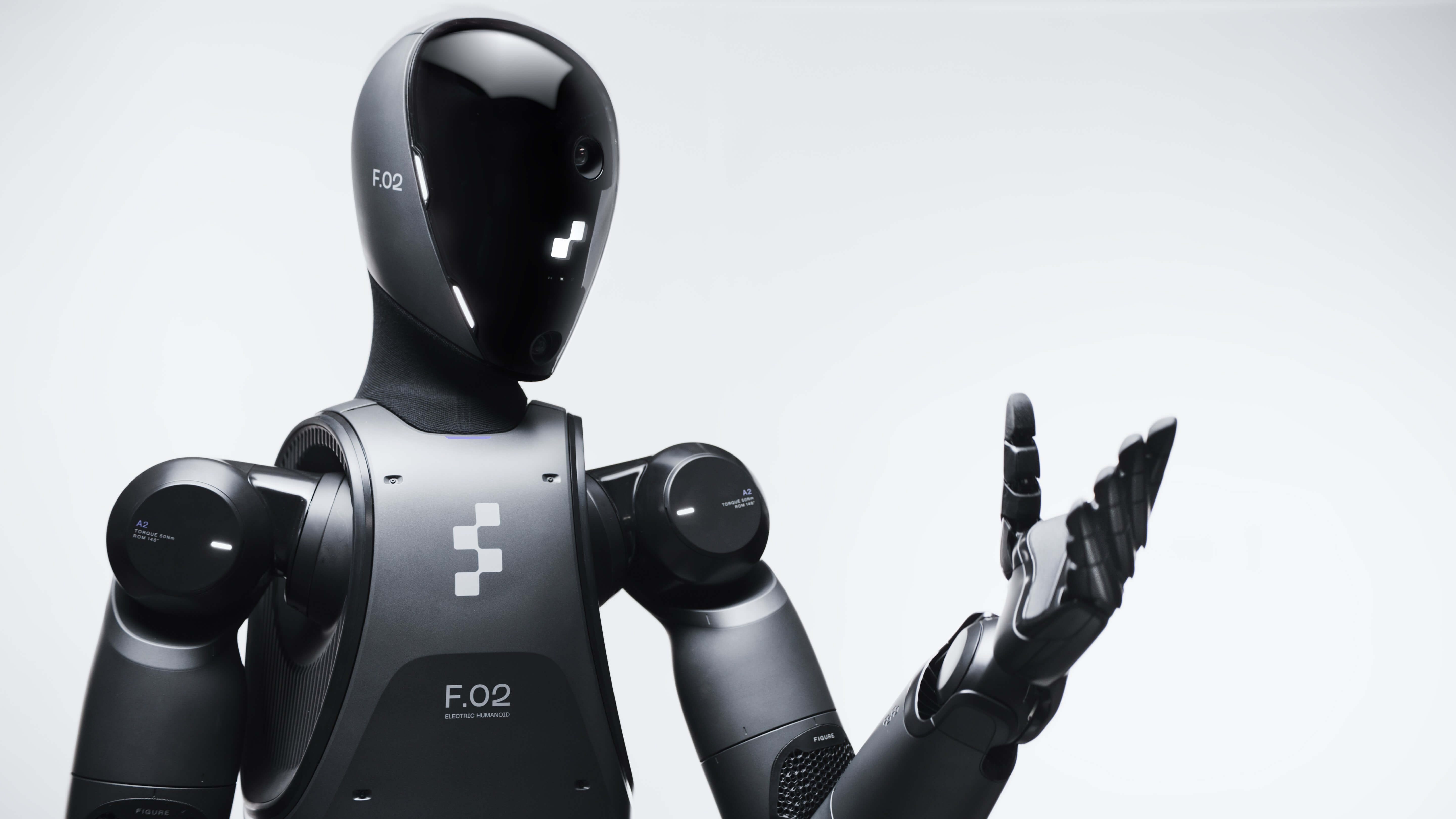
Figure 02 stands 1,680 mm tall and weighs 70 kg with its 2.25 kWh lithium-ion battery integrated into the torso, a design change from Figure 01 that moves the centre of mass closer to the body's centreline and improves dynamic balance during manipulation. All internal cabling is routed through the limbs and concealed behind a matte black panel exterior, eliminating the exposed wiring of the Figure 01 design. The robot's total 35 degrees of freedom include 16 DoF in each hand, with the hands representing Figure AI's fourth-generation hand design. Each finger is actuated by an integrated unit containing the motor and sensors within the finger structure itself, while the wrist provides a range of motion comparable to a human wrist while internally routing all power and signal wiring. The hands carry up to 25 kg with human-equivalent grip strength, and custom motors are manufactured for each joint to optimise torque and performance for that specific degree of freedom.
Figure 02's onboard compute delivers three times the AI inference power of Figure 01, implemented via two NVIDIA graphics processing units installed in the torso. This dual-GPU compute stack runs the Helix Vision-Language-Action model, which provides full upper-body motor control at 200 Hz, enabling zero-shot manipulation of objects the robot has not encountered before by reasoning from visual input to physical action in real time. Six RGB cameras provide a 3D visual perception field covering the robot's full operational envelope. Additional sensors include an IMU, gyroscope, force sensors, touchless human detection sensors, microphones, and speakers. The 2.25 kWh battery charges in approximately 90 minutes at the autonomous docking station. Figure 02 has been validated in sustained 10-hour daily industrial shift operation at BMW's Spartanburg plant performing X3 chassis body shop assembly tasks since early 2025.